
Hospice leaders are navigating one of the most volatile operating environments in the benefits' history, marked by intensifying program-integrity oversight, persistent workforce shortages, and rising expectations for quality and transparency. Staffing is the top challenge reported in a recent survey released by Hospice News and HomeCare HomeBase.
At the same time, families expect high-touch, always-on communication that many teams lack the capacity to deliver.
Hospice is no longer a quiet corner of the care continuum.
Federal and state regulators are sharpening their focus on program integrity, survey readiness, and identification of low-quality providers, including through the Hospice Quality Reporting Program (HQRP) and related enforcement initiatives.
For executives, this creates three pressure points:
Hospices that respond with the status quo—more manual work, more meetings, more spreadsheets—risk burning out their remaining staff while still falling short of expectations.
Many organizations have tried to “out-work” these pressures by:
A HIPAA compliant form builder gives hospice teams a secure, digital way to collect and route patient and staff information, turning paper-heavy processes into streamlined workflows that feed your EMR automatically. QliqSOFT’s no-code, HIPAA-secure forms are built specifically for healthcare, enabling hospice leaders to modernize intake, consents, and bereavement without adding IT projects or increasing clinician burden.
A HIPAA-compliant form builder is a digital tool that lets covered entities design, deliver, and store online forms while meeting HIPAA privacy and security standards for PHI, including encryption, access controls, audit trails, and a Business Associate Agreement. Unlike generic form tools, it is purpose-built for healthcare workflows such as intake, consents, and assessments, and integrates with clinical systems to minimize manual data entry.
QliqSOFT’s digital forms solution adds healthcare-specific capabilities on top of those requirements: drag-and-drop, no-code form creation, conditional logic, e-signatures, pre-filled fields, and automated intelligent routing that can send discrete data or PDFs directly into your EMR while escalating higher-risk patients directly to office staff.
Also Read: Top 10 HIPAA Compliant Form Builders for Healthcare
Hospice organizations can apply QliqSOFT’s HIPAA compliant form builder across the whole patient and staff journey to save time and improve quality.
Hospices can digitize referral and admission workflows so families can complete forms on any device before their first visit, eliminating duplicate questions and manual data entry while speeding onboarding. QliqSOFT forms can capture welcome call details, such as preferred name, language, contact information, and early signs of active infection, while also gathering support system contacts for coordinated communication.
Because forms can be pre-filled with known demographics and payer data, staff can reinforce and validate information instead of re-collecting it, which reduces patient effort, shortens intake calls, and accelerates time-to-admission. Digital intake also improves accuracy by reducing handwriting errors and ensures all required fields are completed before a record ever reaches the EMR.
A HIPAA compliant form builder can automate employment applications, reference checks, and HR onboarding packets while maintaining secure handling of sensitive personal data. QliqSOFT enables HR teams to convert existing paper or PDF forms into digital packets that include e-signatures, required fields, and approver routing, reducing delays and back-and-forth emails.
Onboarding forms—policy acknowledgments, device agreements, and education attestations—can be sent via secure links for completion on staff phones, enabling your hospice to get new clinicians into the field faster without sacrificing compliance.
Between visits, symptom assessments can be digitized and delivered to patients or caregivers on a cadence aligned with your care plans, such as daily during the first week on service or when acuity increases. With QliqSOFT, hospices can configure forms that capture pain, dyspnea, anxiety, or other symptoms, then use scoring logic to classify risk and trigger escalations to the care team when thresholds are exceeded.
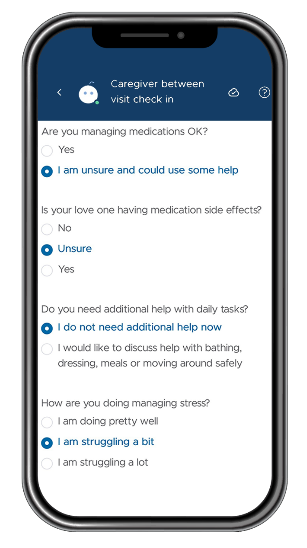
Automated routing and alerts allow nurses to
Pre-visit forms can deliver tailored education and collect structured updates before each nurse or social-work visit, so clinicians arrive informed and ready to focus on what matters most at the bedside. QliqSOFT’s forms can provide.
By front-loading data collection and education, visit time shifts away from paperwork and repetitive explanations toward high-value clinical assessment, coaching, and emotional support.
As tele-hospice and virtual visits expand, organizations need a consistent, auditable way to obtain and document consent for remote care. QliqSOFT supports digital consent forms with e-signatures that can be delivered via secure SMS or email, completed on any device, and automatically stored to the patient record.
This approach reduces delays when families cannot be physically present and ensures consent documentation is available to satisfy organizational policy, payer requirements, and surveyor review.
Order changes for DME, medications, and supplies often stall when teams rely on fax or phone calls for signatures and clarifications. With QliqSOFT’s HIPAA-compliant forms and e-signature capabilities, hospices can standardize order templates, capture the required data elements, and route orders to prescribers or medical directors for rapid, secure signing.
Completed orders can be uploaded to the EMR as discrete data or PDFs, creating a clear audit trail and supporting timely symptom control and patient safety.
Bereavement programs can use digital forms to conduct risk-based assessments, capture family preferences, and schedule follow-up touchpoints across the 13-month bereavement period. QliqSOFT’s scoring and branching logic allow hospices to classify bereavement risk and automatically trigger escalated outreach for individuals who screen as moderate or high risk.
Secure digital assessments and surveys can be sent at defined intervals, with responses feeding bereavement plans of care and supporting compliance with regulatory and accreditation standards.
When evaluating a HIPAA-compliant form builder for hospice, several capabilities are essential to protect PHI, reduce staff work, and ensure data is usable.
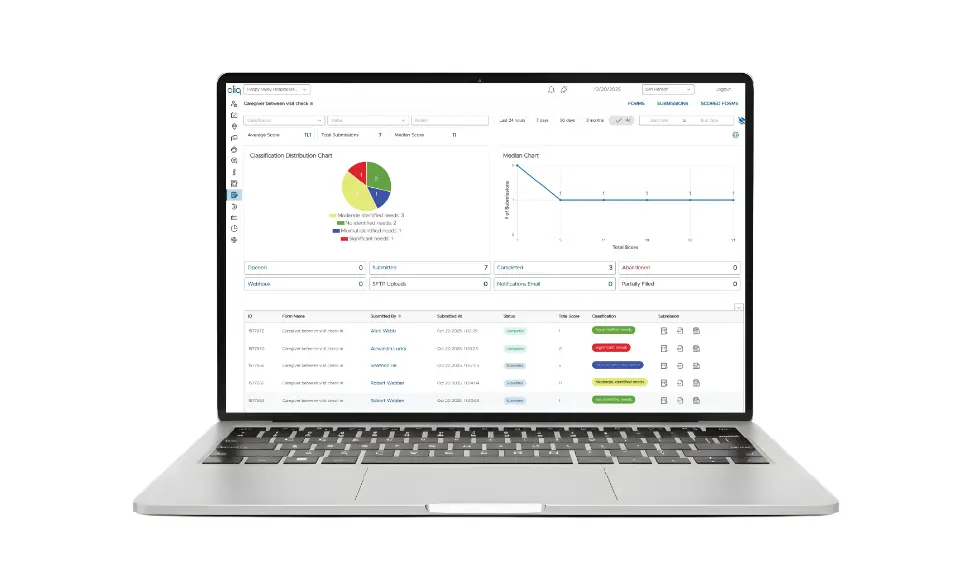
By deploying a HIPAA-compliant form builder like QliqSOFT’s across hospice workflows, leadership can reduce administrative friction, support strained teams, and deliver a more predictable, compassionate experience for patients and families—all while strengthening compliance and data visibility.


Bobbi serves as Vice President of Marketing and Customer Success at QliqSOFT. She is a lifelong learner who is passionate about enabling healthcare transformation. She has 20+ years of healthcare experience in care delivery, consulting, healthcare IT, and market strategy.


© 2026 QliqSOFT, Inc. All Rights reserved





%20(1).png)
