Hospice Management Suite

Secure Communication & Workflows Built for Hospice Care

Support interdisciplinary teams, families, and patients with secure, mobile-first communication, bereavement workflows, and staff safety tools, all without adding administrative burden.

Request a Demo

100% Designed for Healthcare

Brnad LogoBrnad LogoBrnad LogoBrnad LogoBrnad LogoBrnad LogoBrnad LogoBrnad LogoBrnad LogoBrnad LogoBrnad Logo

How QliqSOFT Supports
Hospice Teams

Deliver compassionate, compliant care while reducing operational strain with a Hospice Management Suite designed specifically for hospice teams. QliqSOFT helps hospice organizations streamline communication, improve clinical workflows, and reduce avoidable risk across interdisciplinary teams, field staff, and families.

Key Differentiators for Hospice Organizations

Readmission Reduction-Centered Workflows

The Hospice Management Suite enables proactive symptom monitoring and escalation workflows that surface patient needs earlier, helping hospice teams reduce unnecessary emergency department visits and hospital readmissions that disrupt end-of-life care.

Clinical Efficiency Workflows Built for Interdisciplinary Groups

The hospice management suite is designed for field-based staff who need fast, secure communication without relying on EMR access. Care teams can collaborate around patients, escalate concerns, and document interactions without adding steps to their day.

Purpose-Built Support for Non-Clinical & Volunteer Workflows

By supporting volunteers and non-clinical team members within the hospice management suite, hospice organizations gain better visibility, stronger coordination, and improved oversight while preserving privacy, compliance, and ease of use for every role involved in care delivery.

Hospice-Specific
Communication

From nurses and aides to social workers, spiritual counselors, volunteers, and medical directors, the hospice management suite enables secure messaging that replaces personal phone use while keeping patient information protected.

Request a Demo

Hospice Use Cases & Workflows

Interdisciplinary teams coordinating care across locations, shifts, and schedules
High volume of phone calls replacing efficient, centralized communication

Family communication needs extending beyond scheduled visit hours

Manual, compliance-driven bereavement tracking and follow-up processes
Staff burnout and personal safety concerns in field-based care delivery

Limited documentation visibility for non-EMR staff and volunteers
Delayed medication changes and physician order approvals due to manual workflows
Increased risk from missed documentation, escalations, and IDG follow-through

Hospice Solution Features & Benefits

Secure Team
Messaging

Real-time communication that minimizes delays and phone tags among staff

Patient- and Team-Based Group Chats

Centralized messaging that maintains context across shifts and disciplines.

Mobile-First
Access

Communication from anyware that supports staff working in facilities and in the field.

Secure Family Communication

HIPAA-compliant messaging that reduces calls while improving family experience.

IDG Documentation Capture

Structured inputs across roles that reduces manual documentation and errors.

Learn More

Automated IDG Summaries

Pre-meeting reports that save prep time and improve meeting efficiency

"Review Needed" Tagging

Patient-level prioritization that focuses IDG time on high-risk or complex cases

Pharmacy / Script-Change Workflow

Streamlined approvals that reduce delays in medication changes.

Automated Bereavement Workflows

Scheduled outreach timelines that support trackable CMS-aligned follow-up.

Centralized Outreach Visibility

One view of family contact that ensures no family is missed.

Compassionate Messaging Templates

Consistent communication that maintains quality and tone across staff.

Family Engagement Tracking

Activity logging that improves compliance documentation.

Symptom Escalation Routing

Structured triage paths that indentify issues before ED visits occur.

Volunteer Encounter Forms

Non-clinical observations captured that surface early warning signs often missed.

Between-Visit Monitoring

Ongoing visibility that reduces reactive care.

Educational Content Delivery

Family guidance that supports appropriate decision making.

On-Call Scheduling Visibility

Clear coverage awareness that reduces after-hours confusion.

Visit Path
Awareness

Location context that improves coordination across visits.

SOS Safety
Tools

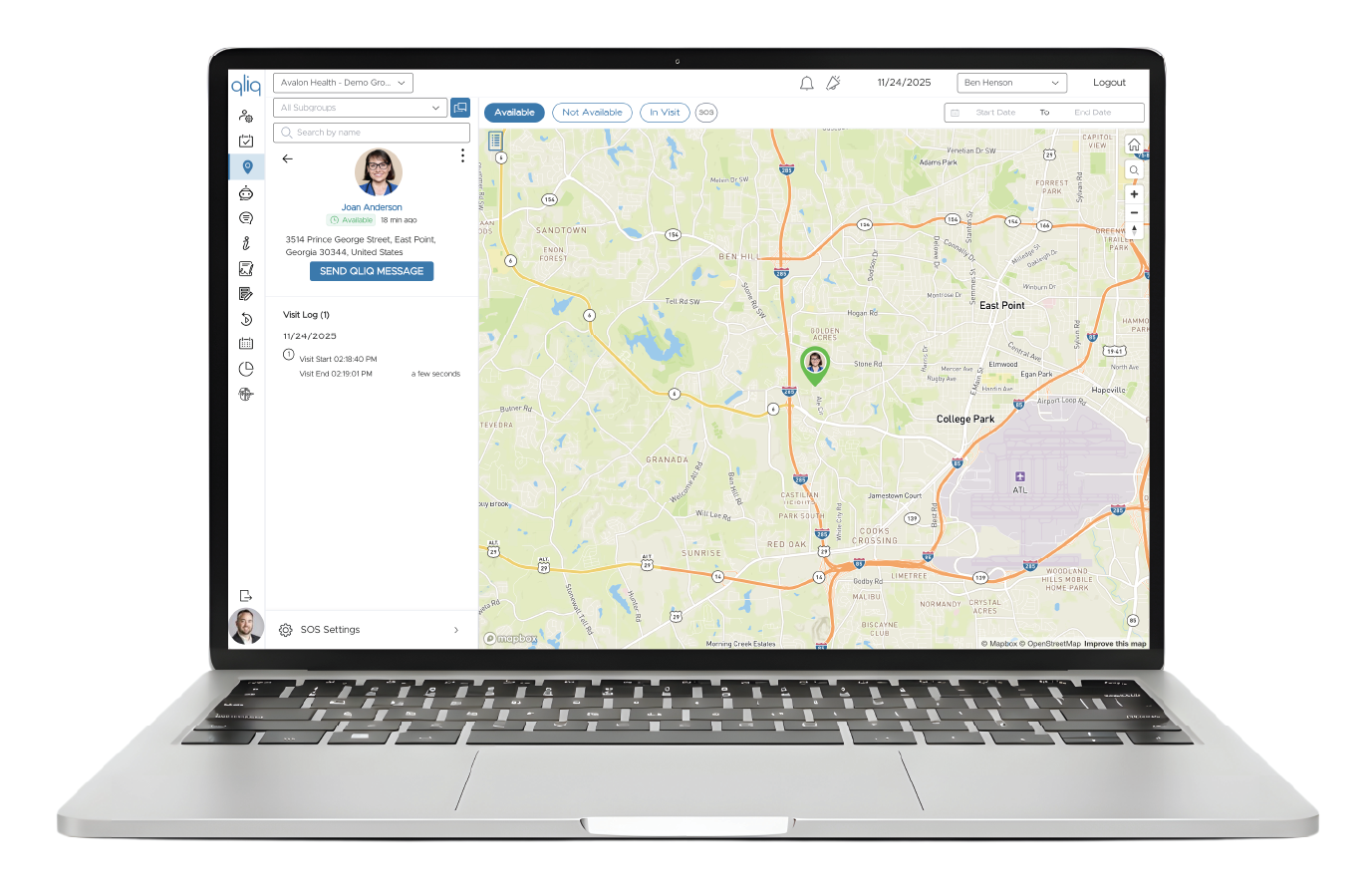
Discreet, emergency alerts that protect staff working alone.

GPS Context
(as applicable)

Location-based awareness that improves response and safety support.

HIPAA-Compliant Architecture

Secure communication that replaces personal texting and shadow IT.

Role-Based Access Controls

Permission management that supports volunteers and non-clinical roles safely.

Secure Mobile Data Handling

Protected PHI that reduces compliance risk.

Centralized Admin Controls

Governance at scale that supports multi-team and enterprise environments.

Request a Demo

Explore the Full Solution

Get a closer look at the platform supporting communication, safety, coordination, and care delivery.

Built for Hospice Organizations of All Sizes

QliqSoft is designed to scale with hospice organizations as census grows and care teams become more complex, supporting both clinical and non-clinical staff without adding operational friction.

Small

Census: 1-100
Staff Count: ~6-34

Designed for lean teams managing care homes and facilities.

  • Fast to deploy with minimal IT overhead
  • Supports clinicians, coordinators, and volunteers on mobile
  • Replaces phone calls and manual coordination early
  • Adds structure without overwhelming small teams

Mid-Size

Census: 101-300
Staff Count: ~34-114

Built to support growing teams and increasing coordination needs.

  • Standardizes workflows across disciplines
  • Improves IDG efficiency and visibility
  • Reduces administrative workload as census increases
  • Supports more users without sacrificing usability

Large

Census: 301-750
Staff Count: ~114-260

Designed for multi-team, multi-region hospice operations.

  • Scales communication across larger care teams
  • Supports complex scheduling and on-call coordination
  • Provides stronger governance and role controls
  • Maintains consistency across locations and roles

Enterprise

Census: 750+
Staff Count: 260+

Built for highly complex, high-volume hospice environments.

  • Supports hundreds of users across regions
  • Custom messaging volumes and workflows
  • Enterprise-grade security and access controls
  • Designed to scale without adding headcount proportionally
Request a Demo

Measurable Operational Value for Hospice Teams

QliqSoft is designed to reduce manual work, unnecessary coordination, and avoidable escalation, helping hospice organizations scale without adding headcount.

Time Saved Across
Clinical & Admin Teams

  • 20–40% reduction in coordination-related phone calls
  • EX: 2–5 hours saved per clinician per week through structured workflows and automated IDG prep
  • Less time spent chasing updates, preparing meetings, and managing follow-ups
IMPACT
More time for patient care,
less administrative burden.

Lower Compliance
& IT Risk

  • Replaces personal texting and shadow IT with secure, role-based communication
  • Simplifies governance as teams scale
IMPACT
Reduced risk without adding operational complexity.

Supporting Census Growth
Without Adding Headcount

  • Workflow automation allows teams to manage more patients with exisiting staff
  • Standardized processes reduce the need for additional coordination roles
  • Avoiding just one additional FTE can represent $60K-$90K+ annually in fully loaded costs
IMPACT
Delayed hiring and improved operational leverage as census grows.

Fewer Avoidable Visits
& Readmissions

  • Earlier symptom escalation and clearer family guidance
  • Faster response times between visits
  • Reduced after-hours calls and unecessary trips
IMPACT
Better continuity of care and meaningful cost avoidance.

Bottom Line:

QliqSoft helps hospice teams do more with the staff they already have, while improving care delivery, reducing burnout, and protecting margins.

Request a Demo

Frequently Asked Questions (FAQs)

Your organization determines which sources need to exchange data and if that data are inbound, outbound or two-way.  Patient-specific data consists of standard fields and custom fields you define.  Each field has a data type to manage data quality.  Custom fields are data elements that you want either visible to staff using secure texting (e.g., a provider's specialty if you are communicating with providers), used to validate patient identity (date of birth), or used to personalize the patient conversation (e.g., their provider's name, a parent or caregiver name).  The patient name, phone number and/or email address are required.

Yes. QliqSOFT enables organizations to use one communication platform where everyone can provide quick updates, collect signatures, deliver orders asynchronously, without back-and-forth phone calls. This enables interdisciplinary teams to collaborate regardless if they are in mulitple locations or have different availability.

QliqSOFT can operationalize required hospice bereavement services by automating 13‑month outreach, risk‑based screening, and documentation, while freeing staff to focus on high‑risk families and complex needs. Its tools turn the Conditions of Participation requirements into a structured, trackable digital workflow rather than manual calls and spreadsheets.

QliqSOFT’s implementation for hospice teams is typically a 4‑week, low‑IT, high‑touch rollout that maps to specific hospice workflows (bereavement, CTI, admission, etc.) and then scales from one pilot team to the whole agency. Most work happens in configuration and training rather than custom coding, so teams see value fast without major EMR disruption.

QliqSOFT supports staff safety in the field by combining GPS‑aware visit tracking, discreet distress alerts, caller‑ID masking, and secure texting into one platform, so leaders always know who is where and can respond quickly to safety concerns. These tools are designed for care‑at‑home teams like hospice and home health, where clinicians work alone in patients’ homes.

Related Blogs