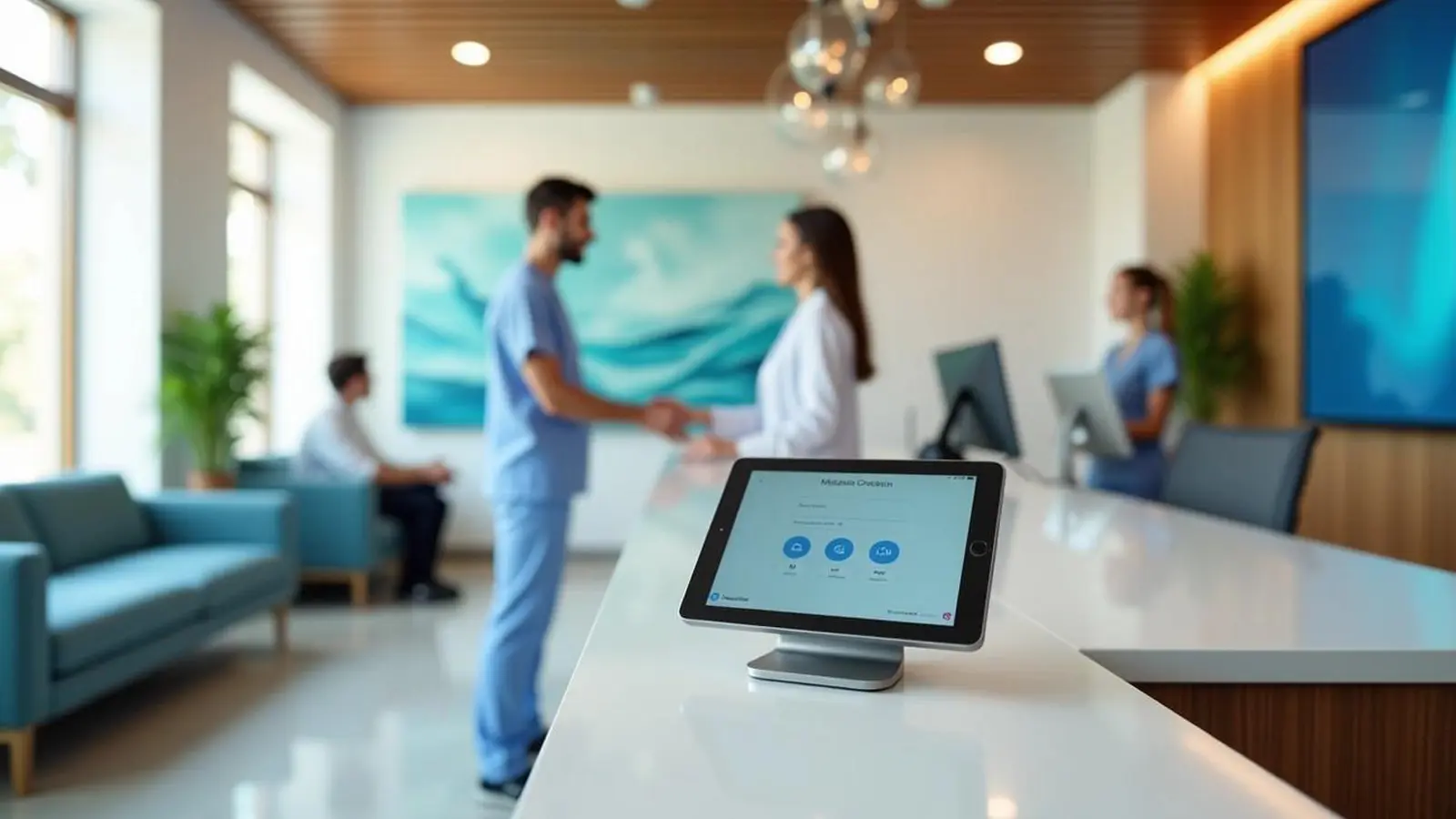
Patient communication platforms are transforming at a staggering rate, with the market expected to reach $7.66 billion by 2030, driving healthcare efficiency. If you're still using traditional intake processes, you're likely losing 22 minutes per patient, totaling 11 hours per week for practices seeing just 30 patients daily.
Traditional methods aren't only time-consuming for your staff but also drive patients away. Research shows 42% of patients consider switching providers after frustrating intake experiences. But there's good news: practices implementing patient communication software report fewer no-shows, improved staff efficiency, and increased patient satisfaction.
Today's patients expect healthcare interactions to be as convenient as their retail and tech experiences. The right patient engagement software puts your repetitive tasks on autopilot, automating appointment reminders and follow-ups, allowing practices to reclaim 15–20 staff hours per week.
We've analyzed the top patient communication solutions that help practices significantly reduce wait times while improving patient relationships. In this guide, you'll discover eight platforms that deliver meaningful patient interactions through next-generation automation, helping you ensure effective data exchange, timely care, and improved health outcomes.
QliqSOFT delivers a HIPAA-compliant clinical collaboration platform trusted by over 1,000 healthcare organizations for its ability to streamline patient communication while maintaining rigorous security standards. First and foremost, this versatile system focuses on enhancing patient engagement through secure texting, HIPAA-secure forms and e-signatures, AI-driven chatbots, and seamless virtual visits.
The platform excels with its comprehensive communication toolkit:
The platform eliminates clipboards and wait times for visits by shifting interactions to automated pre-visit digital outreach. No-code tools and robust form capabilities enable organizations to address all their data capture needs.
At the core of its effectiveness is Cloud Pass-Thru™ encryption technology, ensuring patient information remains protected throughout every exchange.
The Quincy Patient Engagement Platform streamlines administrative processes through automated outreach and digital forms to streamline patient intake. Organizations implementing these tools report reducing patient intake time by over 30%.
See also: The Unexpected ROI of Streamlining Patient Registration and Intake
The platform offers extensive integration options, including connections to popular EHRs such as Epic, Cerner, eClinicalWorks, and Complia. These integrations support bi-directional data exchange, allowing conversations and documentation to flow seamlessly between systems.
Regarding security, QliqSOFT maintains SOC 2 certification and employs point-to-point NIST-approved AES 256-bit encryption for all communications. For practices concerned about maintaining archives, QliqSTOR provides an optional free, client-side secure archive behind your firewall to support compliance and auditing needs.
This platform works exceptionally well for hospitals, outpatient centers, ambulatory care centers, and care-at-home organizations seeking to reduce staff workload and increase throughput. Organizations most successful with QliqSOFT typically aim to:
The platform enables practices to send secure texts that patients can respond to immediately, eliminating the need for app downloads or logins.
First Choice Neurology demonstrates the platform's full potential, achieving a remarkable 10x return on investment within just 10 months of implementation. It currently supports the unique needs of 60+ care locations. By automating patient registration and intake processes, the practice reduced patient registration time by 18 minutes per patient, reduced office staff overtime by 18%, and increased revenue by 24% by enabling each physician to see two additional patients per day. Even more impressive, patient satisfaction remained high, with 81% rating the medical group 4.8 out of 5.0.
Phreesia stands as a trusted leader in patient intake management, serving 4,400+ healthcare organizations nationwide. This comprehensive platform simplifies patient engagement at every touchpoint, from pre-visit communications to post-appointment follow-up.
Phreesia offers robust communication tools that modernize patient outreach. This allows healthcare providers to chat with multiple patients simultaneously from a central dashboard, saving up to 100 phone calls per staff member daily, via a two-way text messaging system. According to research conducted on Phreesia's platform, more than two-thirds of patients prefer communicating with providers via text, exceeding comfort levels with email (59%) and online chat (24%).
Furthermore, Phreesia's automated messaging capabilities include:
Their communication system shows impressive results, with 78% fewer no-shows among patients who confirm appointments through the platform.
Phreesia transforms traditional intake processes with digital solutions, handling over 170 million patient visits annually. Their self-service platform captures comprehensive patient information, verifies insurance and deductible details in real-time, and collects payments before appointments.
Additionally, Phreesia's scheduling capabilities include:
These tools collectively reduce administrative burden, with 87% of patients checking themselves in and staff saving more than five minutes per visit. A notable achievement comes from their referral management platform, which saves 21 minutes of staff time per patient referral and reduces paper faxes by 46%.
Phreesia offers seamless integration with leading practice management (PM) and EHR systems. Their dedicated integration team supports HL7v2, FHIR, proprietary APIs, data extracts, and more. These bi-directional integrations automatically update demographics, insurance information, and consent forms in your PM system, eliminating redundant data entry.
On the security front, Phreesia holds impressive credentials:
They employ dual-encryption for data protection and maintain operations across multiple Tier 4 data centers for 99.995% availability.
Phreesia is particularly effective for practices aiming to reduce administrative workload and improve patient experience. Organizations that have implemented Phreesia report tangible results: 96% of clients would recommend Phreesia to a colleague, and 96% of patients report a positive experience using the platform.
In practice, a 55-provider orthopedics group using Phreesia with athenahealth integration saw an additional 10 patients per day. Likewise, a five-provider pediatric practice achieved a 72% self-check-in rate, streamlining data collection and clinical documentation.
Phreesia particularly excels for multi-location enterprises, as demonstrated by a Florida health system that provided contactless check-in for 500,000+ patients across 1,000+ locations within just 90 days of implementation.
Also Read: 9 Ways to Improve Patient Communication
With over 10,000 practices relying on its platform, NexHealth stands out as a powerful patient communication platform that automates the entire patient journey from scheduling and messaging to payments and forms.
NexHealth offers HIPAA-compliant two-way messaging that eliminates endless phone calls through text-based interactions. The platform enables practices to send secure texts that patients can respond to immediately, eliminating the need for app downloads or logins. This system streamlines patient communication through:
Rather than leaving voicemails that often go unheard, NexHealth enables practices to communicate through platforms patients already use daily, such as iMessage and Gmail. Practices can further engage patients through targeted text and email campaigns designed to bring them back for follow-up care.
Alongside comprehensive communication tools, NexHealth transforms patient scheduling. The platform allows patients to schedule appointments at any time via websites, social media, text messages, email, or QR codes, offering 24/7 online booking. This accessibility is crucial as 73% of appointments are booked after hours.
NexHealth's digital intake process eliminates paper forms. Instead, patients receive form links via text or email to complete at home on any device. Once submitted, these forms, including medical histories, sync directly to your health record system with no scanning or manual data entry required.
The platform's waitlist feature effectively fills last-minute openings, often within 10 minutes of a cancellation. Additionally, the one-click recall system makes it remarkably easy for patients to book follow-up appointments without phone calls.
At the core of NexHealth's functionality is the NexHealth Synchronizer, a proprietary engine for real-time, automated syncing with patient management software. Unlike many systems that struggle with health record integrations, the Synchronizer connects with over a dozen EHRs, reading and writing data directly to your system:
Regarding security, NexHealth conducts annual HIPAA Security Risk Assessments using third-party evaluations to protect patient information. The platform is built specifically for healthcare, with compliance and data security as foundational elements.
Given its capabilities, NexHealth proves particularly valuable for practices looking to digitize patient experiences and reduce administrative workload. Success stories demonstrate its effectiveness. North American Dental Group achieved a 5x increase in new patient appointments after implementing NexHealth across 200+ practices.
Perfect Smile Dental Care reported gaining 35+ monthly Google bookings and 40% more positive reviews after partnering with NexHealth.Equally impressive, Bastida Dental Group saved $2,000 per month in new-patient booking fees after switching from Zocdoc to NexHealth.
Unlike other practices struggling with patient cancellations and no-shows, Daily Smiles Dental provides another success story, having substantially reduced these issues by implementing NexHealth's streamlined patient communications. The platform works exceptionally well for complex scheduling needs, offering customization options such as appointment-specific working hours and support for rotating schedules.
Artera powers patient communication by supporting over 1,000 healthcare organizations and federal agencies across North America with AI-driven virtual agents. As a SaaS digital health leader, Artera unifies, simplifies, and orchestrates digital communications into patients' preferred channels, text, email, or phone in over 109 languages.
At the core of Artera's platform are its versatile AI capabilities that enhance patient interactions:
The platform offers varying levels of automation to match organizational needs, from AI-powered support consoles to fully autonomous digital workforces. This flexibility enables healthcare organizations to begin with basic support and gradually expand their AI capabilities as they become more comfortable with the technology.
Artera ScheduleCare addresses a common patient frustration: 73% of patients skip medical appointments due to scheduling difficulties. The platform enables:
Beyond scheduling, Artera streamlines the pre-visit process. The platform captures patient information, verifies insurance eligibility, and processes pre-visit payments as part of digital intake solutions. Accordingly, this comprehensive approach reduces check-in times by 85% compared to manual methods.
Artera integrates smoothly with leading EHRs and digital health vendors through API, FHIR, and HL7v2 protocols. These integrations enable communication to and from the EHR without redundant data entry.
As a result, Artera maintains exceptional security credentials, including:
The platform stores patient data in SOC 2 Type 2 healthcare-accredited data centers, reinforcing its commitment to safeguarding sensitive information. Additionally, Artera enforces TCPA compliance in all communications to protect patient rights.
Artera serves as an ideal solution for healthcare systems seeking to improve operational efficiency and patient access. The platform has demonstrated success in significantly reducing call volume and increasing response rates for patient surveys. Therefore, it's particularly valuable for organizations looking to:
Organizations implementing Artera report tangible benefits. Practices experience improved provider schedule utilization and immediate visibility of cancellations, enabling them to refill appointment slots promptly. Given these advantages, Artera proves especially effective for large healthcare networks managing complex communication needs across multiple locations and departments.
Also Read: Secure Texting Facilitates Better Physician-Patient Communication
For more than three decades, TeleVox has specialized in patient-provider communication technology, evolving into an AI-powered engagement platform serving over 7,000 healthcare organizations. This comprehensive system streamlines the entire care journey with its next-generation SMART Agent technology.
At the heart of TeleVox lies its AI-driven SMART Agent technology, enabling genuine two-way patient conversations through conversational AI. Unlike basic chatbots, this system allows patients to:
TeleVox's platform excels with its on-demand broadcast messaging, enabling healthcare facilities to communicate urgent updates about office closures or procedural changes immediately. Throughout interactions, the system tracks live responses, helping organizations measure effectiveness and adjust strategies as needed.
The platform connects every aspect of a patient's journey from initial intake forms to final follow-up messages. TeleVox enables patients to:
Beyond streamlining administrative tasks, TeleVox enhances care transitions by alerting teams, sending discharge instructions, and prompting patients with timely follow-up reminders. The system even conducts post-discharge check-ins to monitor symptoms and recovery progress, flagging concerning responses for clinical staff review.
TeleVox integrates seamlessly with all major EHRs, including Epic, Oracle Cerner, NextGen, athenahealth, and Allscripts. This integration encompasses:
On the security front, TeleVox maintains a HiTrust-certified data security infrastructure that protects patient information throughout all interactions.
TeleVox works exceptionally well for mid- to large hospital systems handling thousands of patient contacts daily. The platform particularly benefits:
Healthcare teams implementing TeleVox report fewer no-shows and significant time savings, with automated workflows allowing staff to prioritize higher-value patient care activities.
Dash by Relatient takes a comprehensive approach to healthcare access through a unified platform that simplifies patient scheduling, communication, and registration, ultimately reducing wait times through automation.
Relatient streamlines patient interactions through HIPAA-compliant, two-way messaging that dramatically improves care. Through Dash Chat, practices can handle common inquiries and reduce call volumes with conversational, AI-powered virtual agents that minimize phone traffic. Beyond basic messaging, the platform enables:
This system creates a continuous connection between appointments, making patients active participants in their healthcare journey.
At the core of Relatient's efficiency lies its mobile-first digital intake experience. The platform accelerates registration with configurable digital forms that eliminate traditional paperwork. Patients complete key intake steps independently before arrival, reducing front-desk workload and keeping schedules running smoothly.
Throughout the process, Relatient captures insurance information upfront, automatically verifying coverage while giving patients clear visibility into their financial responsibilities. Indeed, this approach minimizes check-in delays and improves the overall patient experience.
Relatient connects seamlessly with existing systems through proprietary APIs, FHIR APIs, HL7v2.X, and direct database links. This integration ensures real-time data sharing between your EHR and all patient-facing applications. Whenever scheduling rules change or appointments are modified, these updates flow bidirectionally and immediately.
The platform maintains high security standards, supporting HIPAA compliance throughout all communications while safeguarding sensitive patient information.
Relatient works exceptionally well for healthcare organizations looking to digitize patient access and reduce administrative burden. The platform proves particularly valuable for practices seeking to:
First, streamline scheduling operations while creating tailored patient experiences. Second, expand patient access points through centralized scheduling systems. Third, empower patients with self-service options that align with modern consumer expectations.
Organizations implementing Dash report significant improvements in operational efficiency. One vice president noted that they implemented Relatient to drive engagement among the 60% of patients who were not using their patient portal.
The right patient communication platform can transform your practice operations while significantly cutting wait times. Throughout this guide, I've shown how these eight platforms offer comprehensive solutions that address key pain points in healthcare delivery. Staff members save hours weekly through automated appointment reminders, digital intake forms, and two-way messaging systems that eliminate endless phone calls. Patients benefit from self-service options that match their expectations for modern healthcare experiences.
Each platform excels in different areas, whether through AI-powered virtual assistants, seamless EHR integration, or robust security features. Healthcare organizations implementing these solutions report compelling results from 40% shorter wait times to dramatic reductions in no-shows and administrative burden. The comparison table provides a quick reference to help you identify which platform best suits your specific practice needs.
Your patients deserve healthcare experiences that respect their time and preferences. These platforms enable you to deliver precisely that while simultaneously improving operational efficiency. Technology alone won't solve all challenges, but the right system can certainly help you create smoother workflows and more satisfying patient journeys.
Ready to see these benefits firsthand? To explore ways your practice can reduce wait times and improve patient satisfaction. The investment in patient communication technology ultimately pays dividends through improved efficiency, stronger patient relationships, and a healthier bottom line.

Krishna Kurapati is the Founder and CEO of QliqSOFT. He has more than two decades of technology entrepreneurship experience. Kurapati started QliqSOFT with the strong desire to solve clinical collaboration and workflow challenges using artificial intelligence (AI)-powered digital technologies across the U.S. healthcare system.


© 2026 QliqSOFT, Inc. All Rights reserved


%20(1).png)