Home Care Data Analytics Without a Data Team
One of the best sessions at CareForum 2026 had nothing to do with new technology. It was about asking better questions of data an agency already collects.
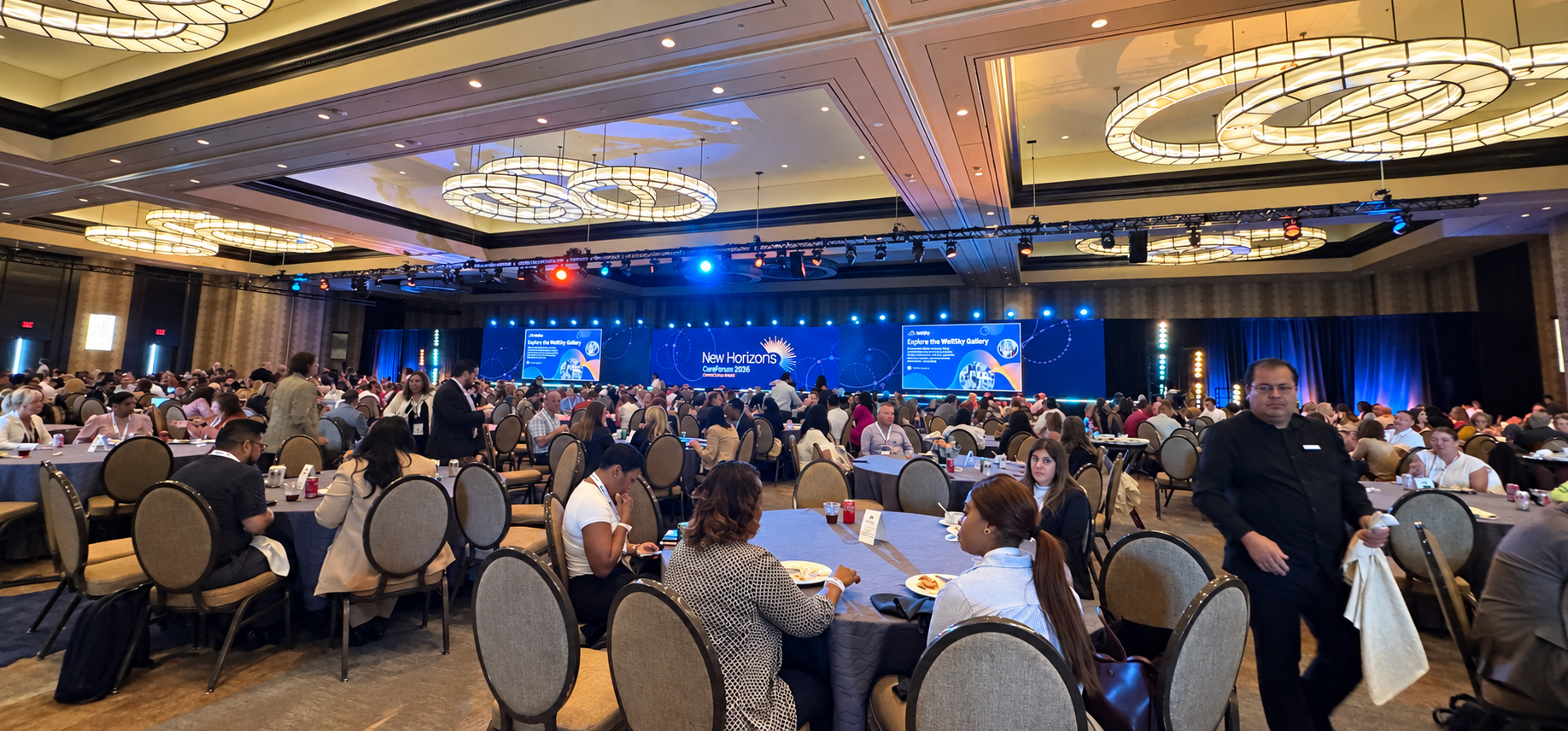
WellSky held CareForum 2026 at the Omni Dallas Hotel from September 13 to 16. Our team was there, in sessions and on the exhibit floor, and AI was a recurring theme across the conference and product discussions.
Two things stuck with us afterward. One was a breakout on turning personal care data into something an operator can act on. The other was what people kept asking about at our booth, which turned out to be a version of the same question.
Start with a better question, not a bigger system
Katie Buell, Chief of Staff at Hillendale Home Care, a non-medical home care agency serving the San Francisco Bay Area, led a session on treating WellSky Personal Care data as a strategic asset.
Her core point was that this work doesn't require a data warehouse or a dedicated analytics team. It requires curiosity and consistency. When everyone captures the same information, in the same place, in the same way, patterns become visible that were previously spread across individual notes and individual memories.
Her method is simple enough for any agency to borrow. Identify a pain point. Get curious about it. Ask a better question, then capture the information that would answer it. Look for the pattern, act on it, measure what happened, and go again. She framed improvement as an ongoing flywheel, something that keeps turning once you start it.
Three questions to borrow
The examples from that session are the part to carry into your own operation.
Which referral sources produce clients who stay? Hillendale looked past referral volume and the revenue a referral brings in right away, and began measuring client length of service by referral source. That can change where an agency spends its business development time. A source sending a handful of clients can produce more value over time than a high-volume source whose clients leave quickly.
How quickly does a new caregiver get their first shift? Hillendale found that caregivers who worked their first shift within seven days of being hired were more likely to reach ninety days. What Hillendale did next matters more than the number. They didn't hire more people to offset attrition. They improved visibility, using weekly reporting so staffing teams could see new caregivers along with their skills and credentials and get them working sooner.
Why is this match not working? Hillendale stopped treating "not a good fit" as a sufficient explanation when a client and caregiver relationship struggles. They introduced standardized check-ins during the first seven days to surface the real reason, so the team could see what was going wrong and fix it.
One caveat, stated plainly. These are one agency's internal findings, described in a conference session. They aren't published research, and the specific thresholds may not hold at an agency with a different client mix. The transferable part is the question and the method, not the number.
The same loop works in other home-based care settings, though the metrics and workflows differ. A home health or hospice team might run it against admission sources, referral response times, or visit completion.
AI summarization inherits your documentation habits
WellSky's AI direction was visible across the agenda. One example: in February 2026 the company launched WellSky Summarize for Personal Care, which generates summaries of client care information for administrators and lets them review a client across 7-, 14-, 30-, or 60-day periods. In WellSky's launch announcement, Kunu Kaushal, founder and CEO of Senior Solutions Home Care, described the value as surfacing what matters from activity notes, caregiver tasks, and comments, and as flagging condition changes over longer stretches that might otherwise be missed.
That connects directly to Buell's point. A summary compresses what's already in the record, so for summarization tools like this, the quality of the output depends in part on the quality and consistency of the information being summarized.
What people actually asked us about
The second thing we brought home came from the booth, and it comes with a caveat about who was in front of us. CareForum draws WellSky's full client base, so the conversations at our booth were not only with home care agencies. A good share were with home infusion and specialty pharmacy teams, who run different software and face different workflows. That mix is part of what made the pattern interesting.
Almost nobody we spoke with asked whether they should adopt AI. They asked what it does inside a specific workflow. The strongest interest was in practical, repetitive work. Outbound outreach to clients and patients. On the infusion and pharmacy side, the mechanics of collecting refill information. The workflows were different, but the goal was the same: cut the time staff spend on routine phone calls.
That points to a simple test for anyone evaluating technology this year. People didn't want AI for its own sake. They wanted less manual work. So when you evaluate an AI tool, ask which specific task it takes off your staff's plate.
Where to start
Home care data analytics doesn't have to begin with a platform decision. Here's the smallest version that still works:
- Pick one pain point your team complains about regularly.
- Write down the question that would tell you what's causing it.
- Check whether you currently capture the information that would answer it, in the same way, every time.
- If you don't, fix the capture before you buy anything to analyze it.
- Report on it on a regular cadence, act on what you see, and measure whether it moved.
Not all useful information starts in the EHR
Buell's third example points to another issue that's easy to miss.
A standardized check-in during a client's first seven days only becomes data if it happens and the answer lands somewhere consistent. If it happens by phone from a coordinator's cell and lives in that person's memory, it's a good practice that produces no pattern.
A lot of what an agency knows about a client starts out this way. A family raises a concern by text. A caregiver reports a schedule problem on the way to a shift. None of it is in the EHR at the moment it happens, and some of it never arrives there at all.
Disclosure: WellSky Outreach is a patient engagement solution enabled by QliqSOFT, and QliqSOFT exhibited at CareForum 2026.
That communication layer is where QliqSOFT works. QliqCHAT supports secure care team communication, and Quincy supports structured text-based outreach to clients and families.
Neither replaces your EHR. What ends up in the patient record, and how much of it, depends on the integrations you have in place and how the workflow is configured. That's a decision to make deliberately, using the question Buell's method starts with. What do we need to know, and are we capturing it the same way every time?
Looking to reduce the manual communication work in your care workflows? See how QliqSOFT can help. Explore QliqSOFT Solutions
Frequently Asked Questions
What metrics should a home care agency track?
Start with metrics tied to a specific problem you already have. A standard dashboard is the wrong place to begin. Examples described at CareForum 2026 included client length of service broken out by referral source, the number of days between a caregiver's hire date and their first shift, and the documented reasons a client and caregiver match is struggling. Each was chosen because it explained something the agency was already worried about.
How can a home care agency start using its data without an analytics team?
Pick one operational pain point instead of starting a reporting project. Write the question that would explain it, confirm your team captures the information needed to answer it consistently, then report on it regularly and act on what you find. The approach described at CareForum 2026 treated this as a repeating cycle with no end date, and it didn't require a data warehouse or dedicated analysts.
Why does documentation consistency matter for AI in home care?
AI summarization tools compress and surface what's already in the record. If different staff capture different information in different places, a summary will be faster to read, but it won't be any more complete than the notes behind it. The usefulness of any summary depends in part on the quality and consistency of the information underneath it.
What happens to information captured outside the EHR?
It sits wherever it landed. A first-week check-in done by phone, a concern a family raises by text, a schedule problem a caregiver reports on the way to a shift. Each is real information about a client, and none of it becomes a pattern unless it lands somewhere consistent. A communication platform can help move those exchanges away from personal texts and unsecured channels and into consistent communication workflows. QliqSOFT, an AI-powered digital engagement platform for home-based care, provides QliqCHAT for secure care team communication and Quincy for structured text-based outreach to clients and families. Neither replaces the EHR, and what ends up in the patient record depends on the integrations in place and how the workflow is configured.
What should agencies ask when evaluating AI for home care operations?
Ask which specific task leaves someone's day. Attendee interest at CareForum 2026 centered less on the technology itself than on workflow outcomes that reduce staff phone time, such as outbound outreach and, for the infusion and pharmacy teams also at the conference, collecting refill information. Routine outreach is a good example: reminders and check-ins that once took a phone call can move to structured text messages that clients and families answer on their own time. A demonstration that can't name the work it removes is hard to evaluate.
Sources
The sources below support the WellSky product details, Hillendale's company information, and the conference dates and venue. The session examples and exhibit hall observations come from QliqSOFT team members who attended CareForum 2026 and are not independently verified by these sources.
- WellSky: Introduces AI-Powered Summarization Technology for Personal Care, February 5, 2026
- WellSky Personal Care, powered by WellSky SkySense AI
- Hillendale Home Care leadership team
- CareForum 2026 event site, September 13 to 16, Omni Dallas Hotel