What an AI Scribe Rollout in Home Health Actually Looks Like
Most AI documentation pilots get judged on accuracy and minutes saved. A home health CEO's account of an early rollout points at something those numbers don't capture.
AI scribes are beginning to move into real home health and hospice workflows. Detailed accounts from the organizations actually running them are still uncommon.
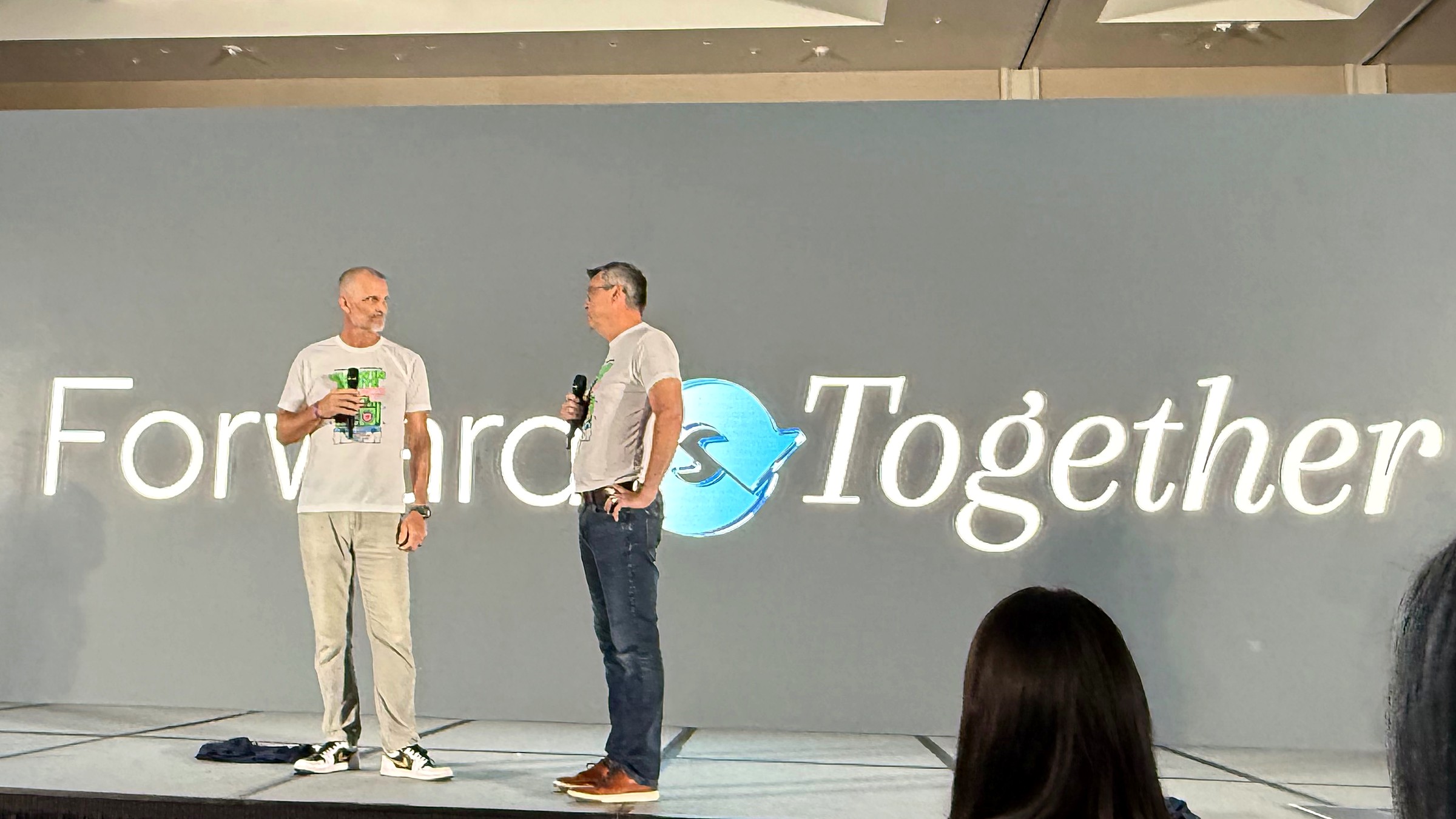
At the Homecare Homebase Users Conference in Orlando in September, April Anthony gave one. Anthony is CEO of VitalCaring Group, and founder and former CEO of Homecare Homebase. In her session, she described what happened when her clinicians began using an AI scribe on real visits. Her remarks below are paraphrased, not quoted.
Why this came up at HCHB UC 2026
Homecare Homebase spent the past year making a specific argument about AI in home-based care: that it belongs embedded inside the workflows clinicians already use, not bolted on as a separate application, and that clinicians should stay the final authority over anything it produces. The company published a report on that approach in May 2026, and in March it announced Curate: Scribe, an AI documentation capability built with StenoHealth that runs inside the HCHB visit workflow.
At the Users Conference, HCHB leadership presented that work as something already in clinicians' hands, not a roadmap item, and then handed the stage to a customer to describe what using it has been like. The broader framing offered from the stage was that the EHR's historical job has been to record the work, and that the intent now is for it to help do the work.
What followed was Anthony describing implementation inside her own organization. One challenge she described had little to do with model accuracy. It was where clinicians were directing their attention.
The clinicians started watching the device
She described her clinicians becoming fixated on the screen. The questions running through a clinician's head during a visit shifted to what do I tap next, what do I answer next.
Nothing was broken. The tool worked, the clinicians worked, the notes came out. But attention had moved from the patient toward the device, which runs against the reason for adopting an ambient scribe in the first place.
The correction she described was behavioral, not technical. The retraining was to talk through the visit the way a clinician normally would and let the technology listen, treating prompts as guidance on which areas to cover instead of tasks to service one at a time. Once a clinician registers the prompt, the goal is to set the device aside and return attention to the patient.
That's easy to miss, because accuracy and time-saved metrics can look healthy while it's happening. In home health and hospice, the visit takes place in someone's living room and a family member is often sitting right there, so how present the clinician seems is visible to people who were never part of the pilot design. So ask about it directly.
The accuracy bar described was parity, not perfection
The reasoning she gave for judging output quality is more portable than any specific threshold.
Human documentation isn't perfect either. Notes completed after a long day in the field can contain errors too, and they aren't audited against a standard of flawlessness. On that logic, the practical bar for AI output is parity with what an organization currently produces, not perfection.
The useful part is the comparison it points to. The available benchmark isn't an abstract idea of a correct note. It's your own current documentation, measured honestly.
Review the output closely before scaling
She described her team reading AI-generated notes closely during the early phase instead of relying on spot checks, and said that review caught things that needed correcting. As volume grew and confidence in the output rose, the pace of the rollout picked up.
She paired that with a boundary you should write into policy. The technology can assist with documentation, but clinician review and validation remain part of the workflow. Time to review and edit belongs in the process, not in the column of overhead to remove.
Close review costs something, and the case for scaling it back grows as output starts looking reliable. Have that argument on purpose. Decide up front what your review standard is, who owns it, and what evidence would justify relaxing it.
Decide how the saved time gets used
She was also direct about the economics. Her organization is investing in the tool and expects a return, which means productivity expectations rise as clinician time is freed. She said clinicians should share in that return, and described telling them so plainly.
Whatever an organization decides about that split, the transferable part is making the decision and communicating it. Time freed by AI documentation gets allocated somewhere. Naming where, early and clearly, is a better starting point than leaving it unaddressed while the rollout scales.
A note for hospice leaders
The examples in this session came from home health. The attention question travels, since it's about what a clinician does in a room with a patient and a family, and that doesn't change by service line.
Hospice carries documentation requirements home health does not. Medicare's conditions of participation require an interdisciplinary group (IDG) to prepare and maintain the plan of care (42 CFR 418.56), and certification of terminal illness requires a physician narrative explaining the clinical findings that support a life expectancy of six months or less (42 CFR 418.22). That regulation also states the narrative must reflect the patient's individual clinical circumstances and cannot contain check boxes or standard language used for all patients.
How any given tool interacts with requirements like these is a question for the vendor, not something to assume either way. If you're evaluating an AI scribe for hospice, ask specifically. Don't expect a home health rollout to map across.
Questions to take into your own rollout
Four to answer before you scale anything:
- How will we know if clinician attention moved? There's no standard measure for this, so it comes down to asking. Do clinicians feel more or less present during a visit than before? Do patients and families notice a difference? Accuracy and time-saved reports won't surface it either way.
- What is our current documentation error rate? Establish your current documentation baseline so you're comparing AI output against actual performance, not an assumed standard.
- Who reads the notes, and for how long? Name the reviewers, the volume, and the conditions under which review scales back.
- Where does the saved time go? Decide, then say so.
Where this sits next to the rest of the work
Ambient documentation addresses one specific burden: the gap between a visit happening and a visit becoming a record. That's a real cost, and the HCHB sessions in Orlando were largely about attacking it from inside the record.
It's aimed at one part of the day. Other gaps sit outside the visit itself: reaching a patient who isn't home when the clinician arrives, answering a family question that lands at nine on a Saturday night, coordinating between visits. Those run through the communication layer, not the documentation workflow.
QliqSOFT works on that layer, and integrates with Homecare Homebase without replacing anything in it. If your agency came out of this conference season with an AI roadmap, map the between-visit gaps alongside it.
See how QliqSOFT works with your existing workflows. Talk to our team
Frequently Asked Questions
What is an AI scribe in home health?
An AI scribe listens to a clinical visit and drafts the documentation from the conversation, so the clinician spends less time turning a visit into a record. In home health and hospice that usually means the clinician narrates the visit normally while the tool captures it, then reviews and edits the draft before it enters the chart. Some run as a separate app; others are built into the EHR's own visit workflow, as Homecare Homebase's Curate: Scribe is.
What is an overlooked challenge when adopting AI documentation in home health?
Clinician attention. Speaking at HCHB UC 2026, VitalCaring Group CEO April Anthony described clinicians becoming focused on responding to the device during a visit, which pulled their attention away from the patient. The tool worked and the notes came out, but presence in the room suffered. Her fix was training clinicians to narrate the visit naturally and let the tool listen, instead of treating each prompt as a task to complete. Accuracy and time-saved metrics won't show you this, so ask clinicians and families directly.
How should an agency pilot an AI scribe in home health?
Run it on real visits with a defined group of clinicians, and decide in advance what you're measuring. Accuracy and time saved are the obvious measures. Two others are easy to leave out: whether clinician attention during the visit changed, which usually means asking clinicians and families directly, and what your documentation looked like before the pilot, so you have a baseline to compare against. Set your review standard up front, including who reads the output and what would justify scaling that back, and decide how any time the tool frees up will be used before clinicians ask.
What should hospice teams ask before adopting an AI scribe?
Ask how the tool handles the documentation hospice carries and home health doesn't. Medicare's conditions of participation require an interdisciplinary group (IDG) to prepare and maintain the plan of care (42 CFR 418.56), and certification of terminal illness requires a physician narrative explaining the clinical findings that support a life expectancy of six months or less (42 CFR 418.22). That regulation also states the narrative must reflect the patient's individual clinical circumstances and cannot contain check boxes or standard language used for all patients, which is a specific question to put to any vendor generating text. A home health rollout doesn't map across on its own.
What does an AI scribe not solve in home-based care?
It addresses the gap between a visit happening and a visit becoming a record. It doesn't touch the work that happens between visits: reaching a patient who isn't home when the clinician arrives, answering a family question that lands at nine on a Saturday night, or coordinating across a field team spread over a service area. That work runs through communication rather than documentation. QliqSOFT provides HIPAA-compliant digital patient engagement and clinical collaboration for home-based care organizations, and connects to the EHRs those teams already use.
Sources and attribution
Publicly available references used in this article. The session account is paraphrased from April Anthony's presentation at HCHB UC 2026.
- Homecare Homebase: Curate: Scribe announcement, March 12, 2026
- Homecare Homebase: AI in Clinical & Revenue Operations report
- 42 CFR § 418.56: Interdisciplinary group, care planning, and coordination of services
- 42 CFR § 418.22: Certification of terminal illness