Hospice Bereavement: Your Census Grows Faster Than Hospice
Hospice days grow about 32 percent by 2036 with no new hospices. Bereavement grows with deaths, not census, so families outpace patients. Running it at scale.
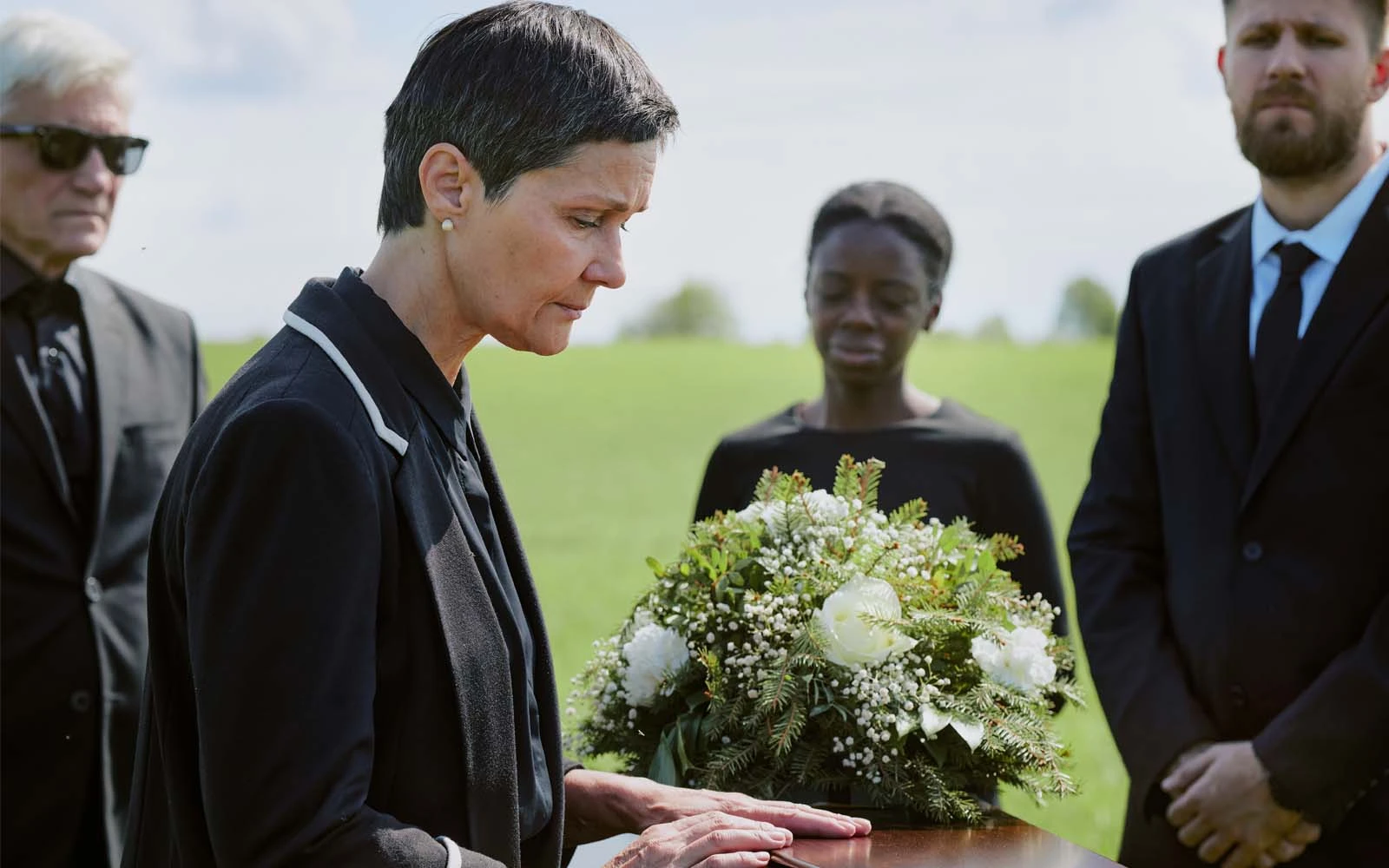
Hospice is the faster-growing half of home-based care, and everyone in the field can feel why: the people most likely to choose hospice are the people the country is about to have far more of. What fewer leaders have priced in is that hospice does not grow one population. It grows two, and the second one grows faster.
The first is patients. The second is the families you follow for thirteen months after each death. With CMS's enrollment moratorium freezing the number of hospices at 6,706 and blocking new branches, both populations land on the same counselors, chaplains, and volunteers you have today. Here is the arithmetic, from public sources, and what it means for how a bereavement program has to run.
Where the growth comes from
MedPAC's March 2026 report puts hospice use at 52.9 percent of Medicare decedents in 2024, and the share climbs steeply with age: 41 percent of decedents aged 65 to 74, 53 percent at 75 to 84, and 65 percent at 85 and older. Now age the Census Bureau's population projections forward. From 2026 to 2036 the population 80 and older grows about 56 percent, and deaths at 65 and older grow about 28 percent, because the largest cohorts in American history are moving into the ages where mortality concentrates.
Multiply deaths by age-specific hospice use, hold everything else at 2024 levels, and hospice days grow roughly 32 percent over the decade. Holding today's per-hospice workload would take about 2,100 more hospices. Under the moratorium there will be none, so the average hospice absorbs the growth itself: about a third more patient days through the same license. Every input and its citation is on our Data and Sources page.
Bereavement grows with deaths, not with census
This is the part that hides in the averages. The Medicare Conditions of Participation require bereavement services to be available for up to a year after each death, and most programs run thirteen months to carry families through the first anniversary. Your bereavement caseload is therefore a function of deaths per year, not average daily census, and deaths per year are what the demographic wave is pushing hardest.
The relationship is mechanical: deaths per year equal average daily census times 365 divided by average length of stay, and standing bereavement census is roughly deaths per year times survivors per death, carried for thirteen months. For a hospice with a typical length of stay, that standing family census runs many multiples of patient census. Our bereavement census calculator on the hospice page runs it for your numbers in about twenty seconds. Two things it will show you:
- Every point of admissions growth arrives twice: once as a patient, and thirteen months later as a family still on your roster.
- If length of stay shortens, as MedPAC's data show median stays remain short at 19 days, deaths per year rise even faster than census, and the bereavement roster with them.
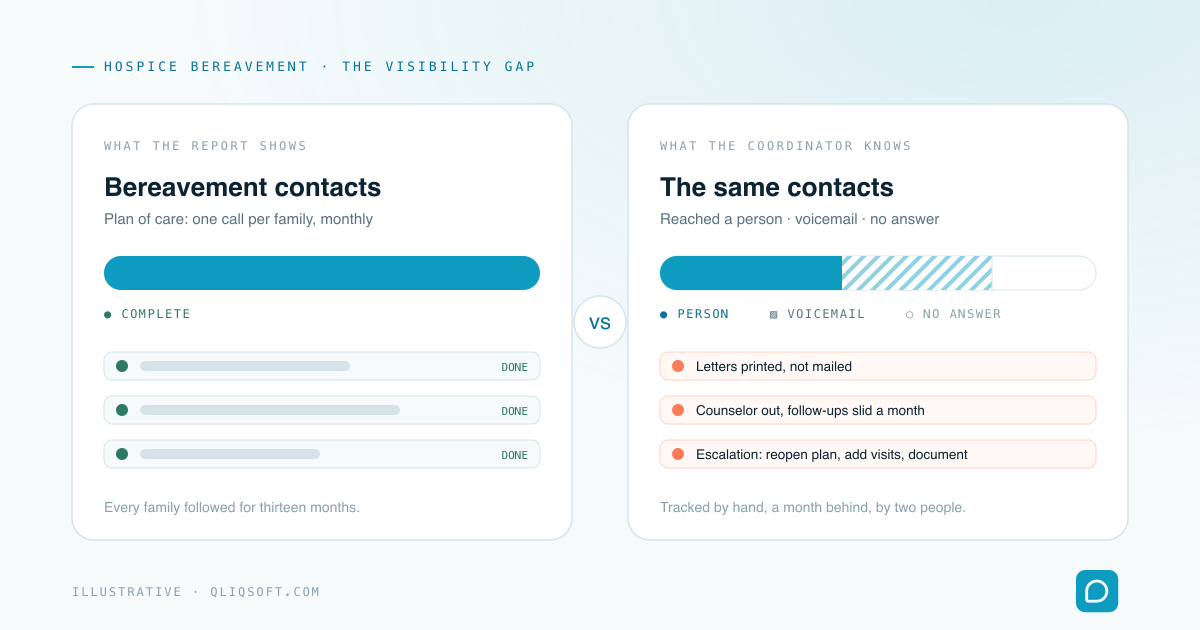
Grief support is a Condition of Participation and it is where a hospice's reputation in a community is made or unmade. It is also, in most programs, the most manual work in the building: mailed letters, phone calls that go to voicemail, sign-up sheets for support groups. That is exactly the work that does not scale by a third with the same people.
Running a bereavement program at scale
Reach every family, automatically, on their phone
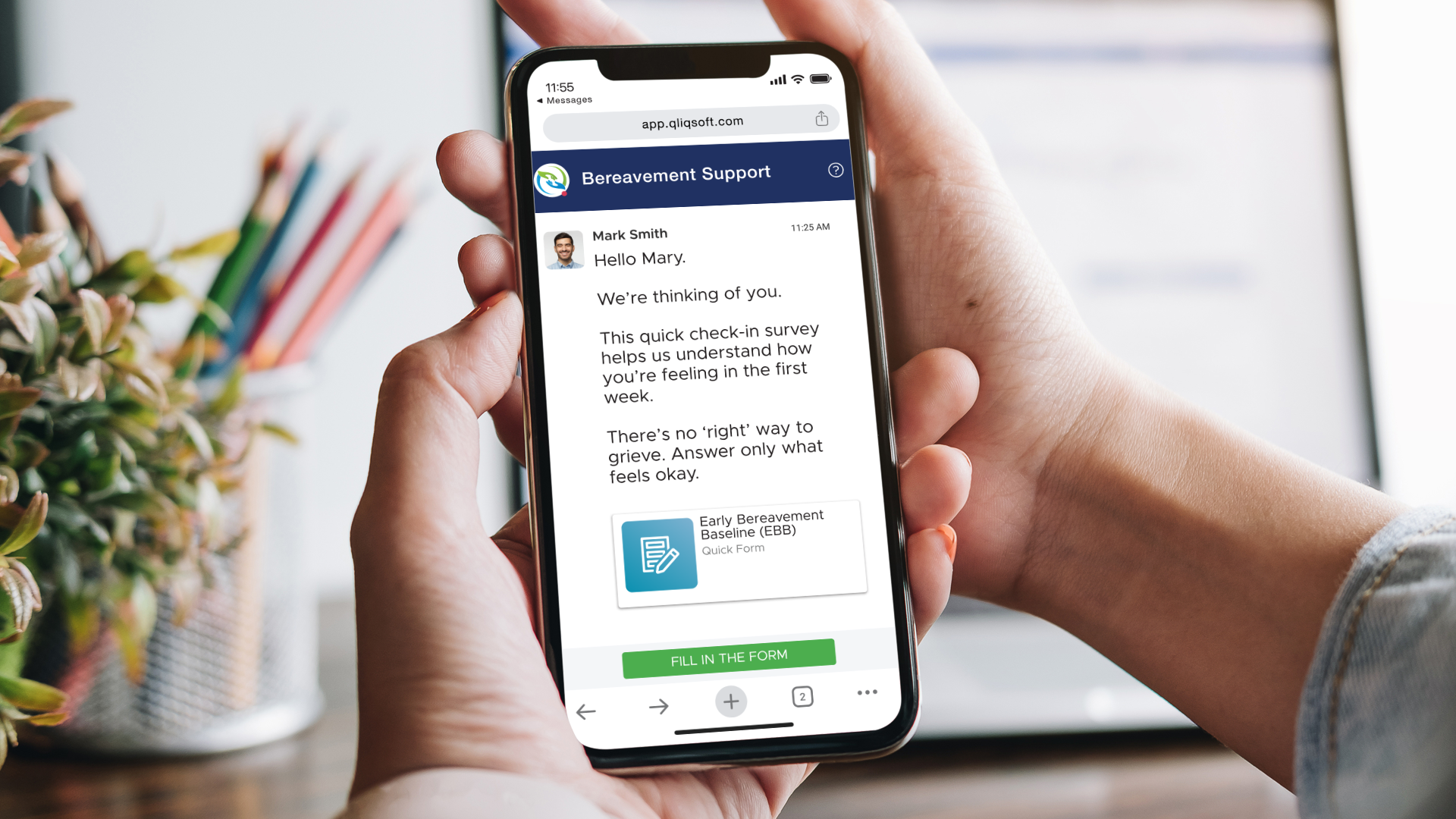
A thirteen-month journey of check-ins, anniversary messages, support-group invitations, and grief resources can be delivered by text to every survivor, in their language, without a counselor placing each call. That is what Quincy for bereavement does. Families who need a person get one; the program's baseline coverage no longer depends on how many hours the team had that week. Coverage is also what leadership most often cannot see: Frank Brito's five questions about bereavement visibility are a quick test of whether your reports show it.
Let the data say who needs a counselor
When every family is engaged, the ones who stop responding, or whose scored check-ins signal complicated grief, surface on their own. Counselor time goes to the families the data says need it, which is the only allocation that holds when the roster grows a third and the team does not. The Bereavement and Family Support bundle wraps the outreach, the assessments, and the record together.
Give surveyors and the community something to see
Automated outreach leaves a documented record of every touch, so the program your CoPs require is also the program you can show. And families who were cared for after the loss are the families who talk about your hospice in the community your next referrals come from.
Do not forget the team meeting
The IDG has to review more patients in the same meeting time. Our IDG communication channel and the IDG prep calculator address the other half of the hospice capacity problem: the hours a growing census pulls into meeting preparation.
Priced for the census you actually carry
Bereavement engagement is priced per survivor per month, only while you carry them, and families are never billed as active patients. So the meter follows the thirteen-month roster the demographics are about to expand, and drops each family off when their journey completes. The complete model is on our pricing page.
The moratorium did not create the bereavement problem. It removed the possibility that someone else's new hospice would absorb it. The programs that thrive through the next decade will be the ones that treat every family's thirteen months as something the system carries by default, and their counselors' time as the scarce resource it is.
Why does hospice bereavement grow faster than hospice census?
Bereavement caseload is driven by deaths per year, not average daily census, and each death starts a thirteen-month journey. Deaths at 65 and older grow about 28 percent from 2026 to 2036 while the 80-plus population grows about 56 percent, so the family roster expands faster than the patient roster and stays expanded longer.
What do the Conditions of Participation require for bereavement?
Hospices must provide bereavement services to families and other individuals in the bereavement plan of care for up to one year following the patient's death, based on an assessment of needs. Most programs run thirteen months to cover the first anniversary.
How is bereavement engagement priced?
Per survivor per month, only while the family is in the program. Discharged families never bill as active patients, and completed bereavement journeys drop off the meter. The full model is on the pricing page.

Founder & CEO of QliqSOFT. Building healthcare communication solutions for 12+ years. Focused on closing gaps in care through technology that enhances human connection.